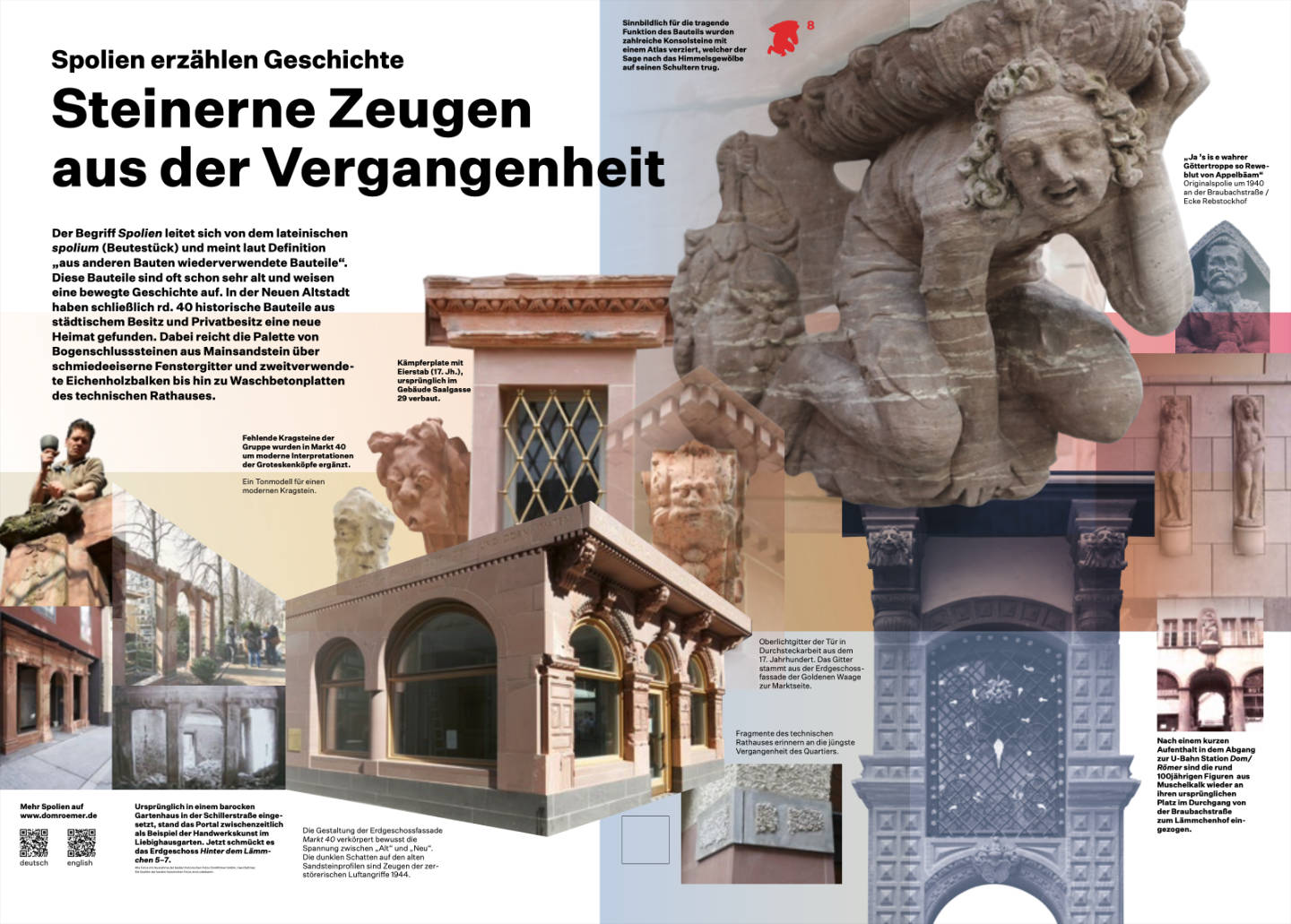
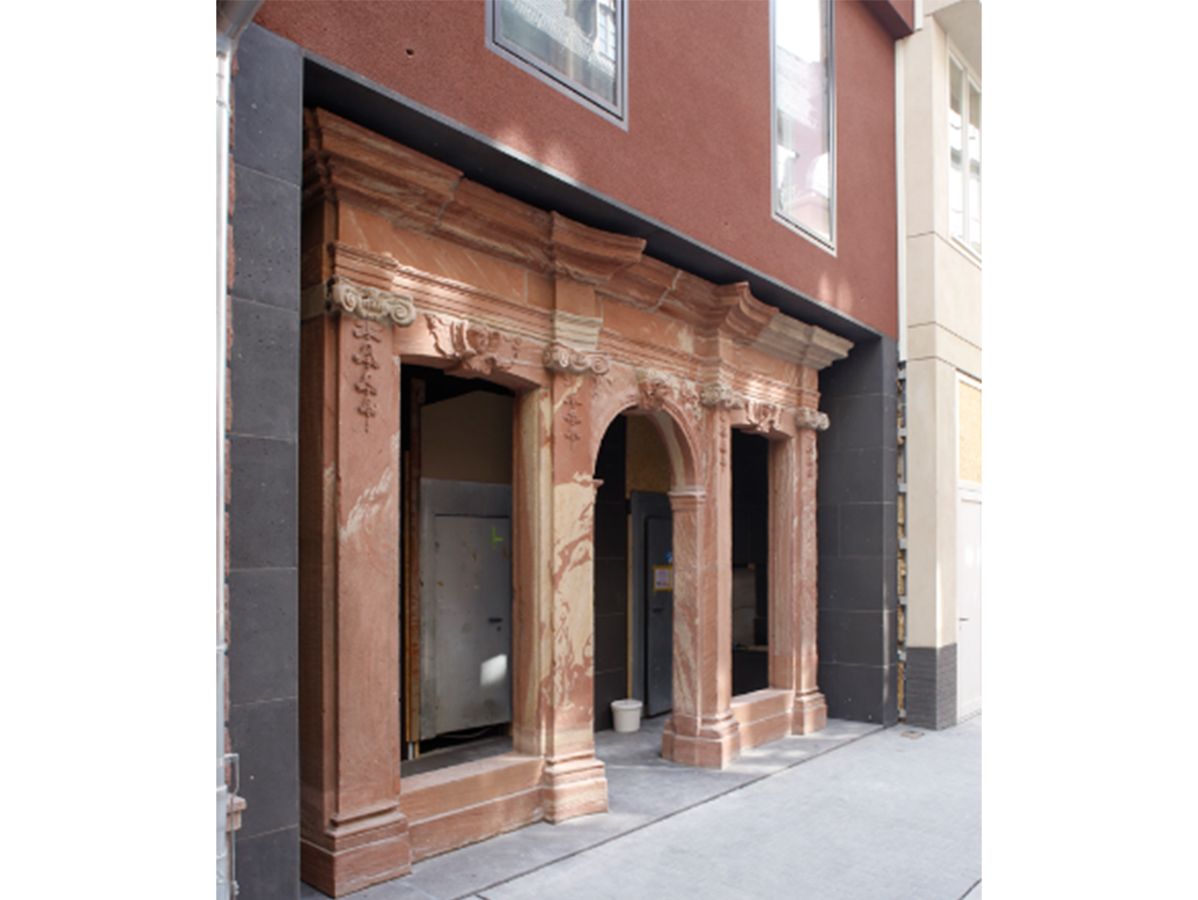
The use of spolia in architecture has a long tradition. This involved incorporating individual remnants from destroyed buildings into new constructions, as well as transplanting entire construction systems. When spolia are added to new buildings, it is usually for design reasons and out of appreciation for special architectural elements, which may also serve to convey historical significance. In preparation for the use of spolia in the New Old Town, the City of Frankfurt commissioned a comprehensive documentation of existing pieces beginning in 2008. A distinction was made between spolia in municipal ownership and those in private ownership.
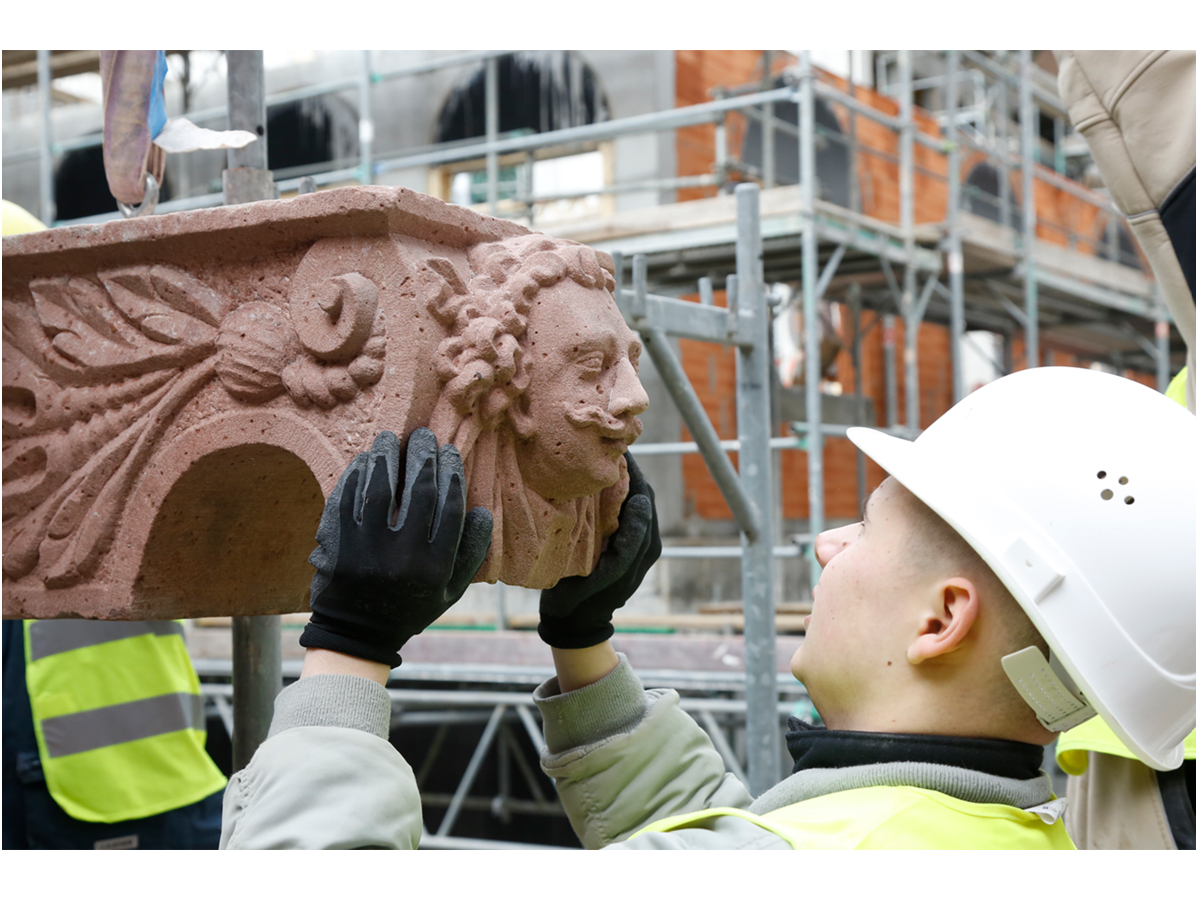
In the New Old Town, around 40 elements from the available portfolio of decorative and architectural components were visibly incorporated into the buildings. A distinction is made between original spolia, which had already been used in the predecessor buildings, and analogous spolia, which were originally part of a neighboring building. To document this planning process, DomRömer GmbH produced a spolia book.
In addition, reused oak timbers, valued for their positive material properties, were employed as load-bearing components. These include, among others, nearly all visible wooden elements in the façades of the reconstructed buildings, as well as selected, highly stressed structural elements inside the constructions.