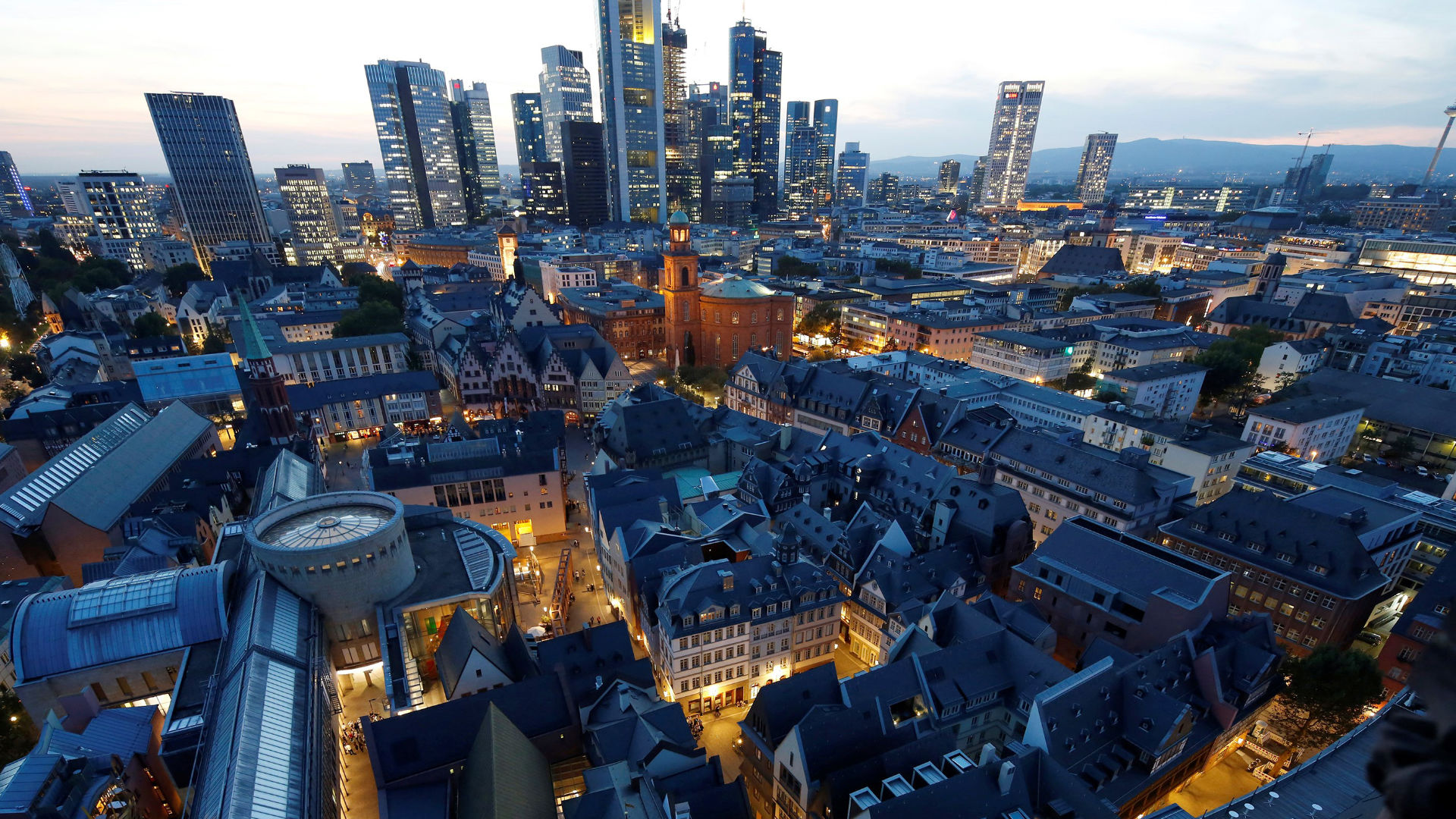
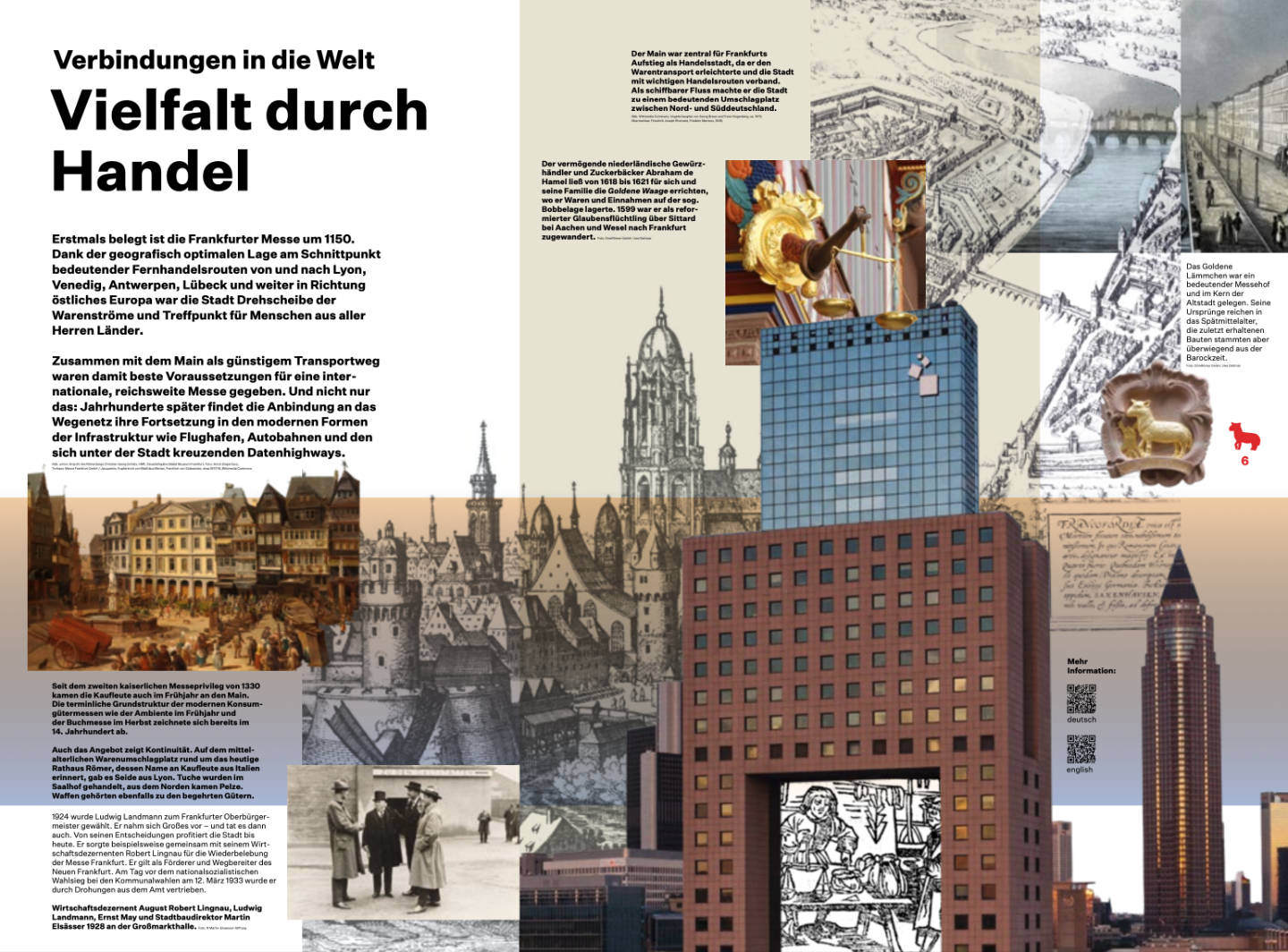
The Frankfurter Messe is one of the oldest and most important trade fairs in the world. Its history stretches back over 800 years and originated in the area between the Cathedral and the Römer. The imperial privileges granted as early as the Middle Ages made Frankfurt an important and secure trading center within the Holy Roman Empire. And even at that time, the Main River was already an important trade route within the network of European waterways.
Today, Messe Frankfurt is one of the largest trade fair organizers in the world. These international events promote both local and global trade.
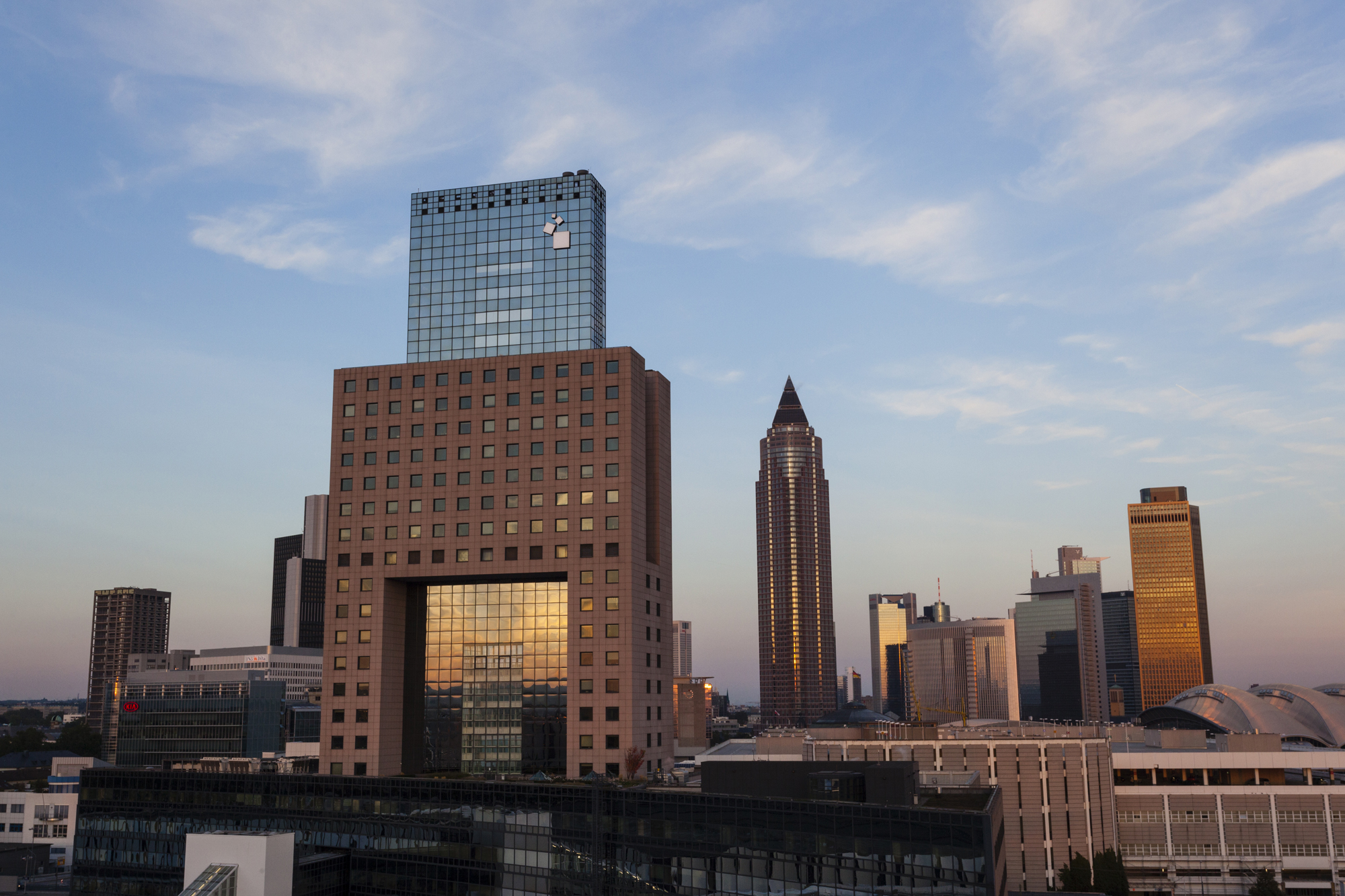
At the center of the exhibition grounds stands the so‑called Torhaus, which houses large parts of the trade fair administration as well as services for customers and guests. With its architecture by Oswald M. Ungers, the building forms a prominent and widely visible landmark. On the occasion of its 40th anniversary in 2025, Mr. W. Marzin, Chairman of the Executive Board of Messe Frankfurt, stated: “The Torhaus is the heart of our exhibition grounds. Its gate‑like character symbolizes both the center and the openness to the world that define Messe Frankfurt.”
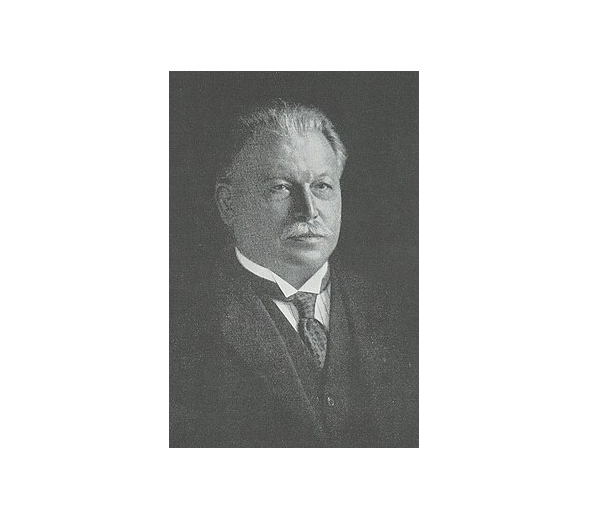
Ludwig Landmann (1868–1945) was a liberal politician and served as Mayor of Frankfurt am Main from 1924 to 1933. During this time, he had a significant influence on the city’s development. Together with City Building Officer Ernst May, he advanced the Neue Frankfurt project during his term. This, among other initiatives, helped establish Frankfurt as a center of modern architecture, design, and socially oriented urban planning.
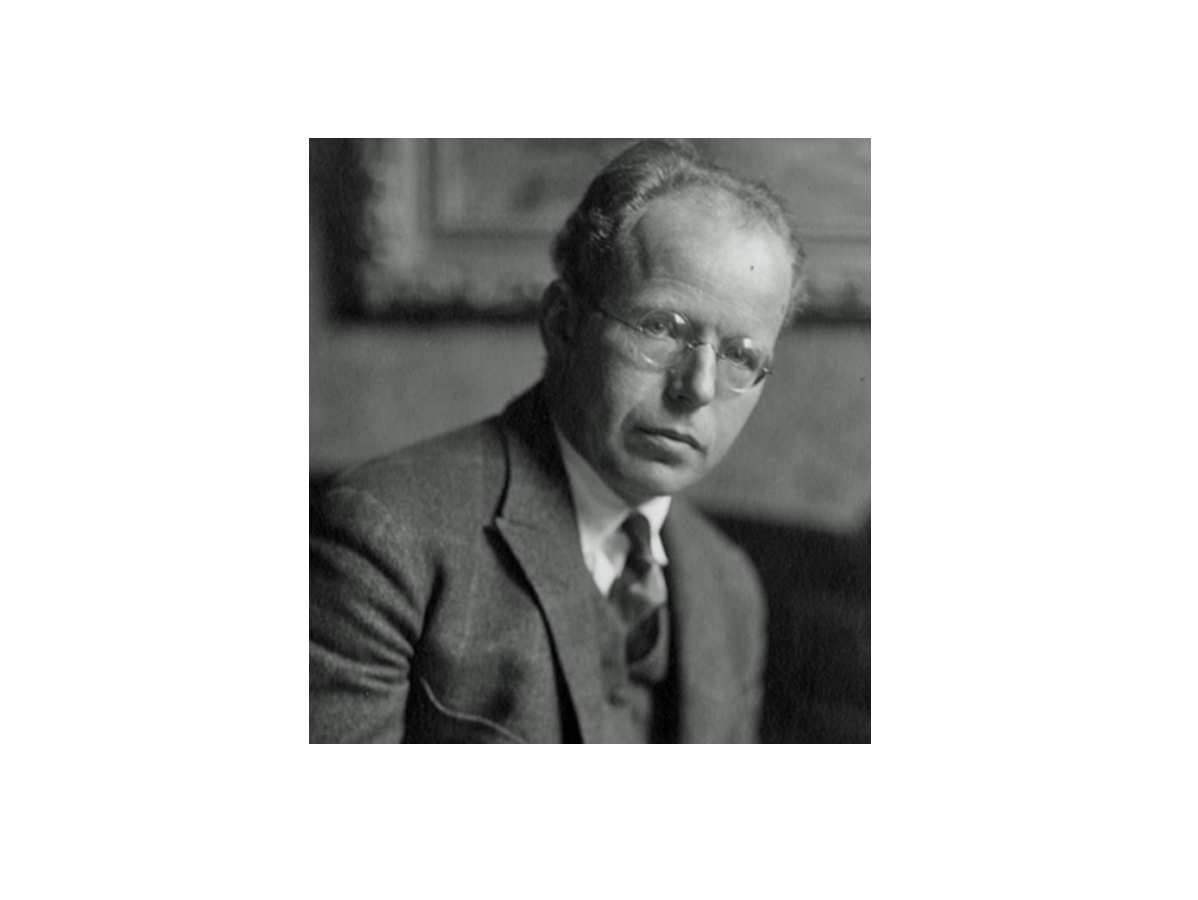
As City Building Director, Martin Elsaesser, together with Ernst May, was a leading figure in the urban development movement Das Neue Frankfurt. He gained international recognition through the construction of the Frankfurt Wholesale Market Hall, which today houses the European Central Bank. Since 2015, the City of Frankfurt has commemorated this specialist in large-scale buildings with a dedicated monument.
Between 1941 and 1945, more than 10,000 Jewish citizens were deported to concentration camps from the grounds of the former Grossmarkthalle. A memorial site aims to preserve the remembrance of these events.